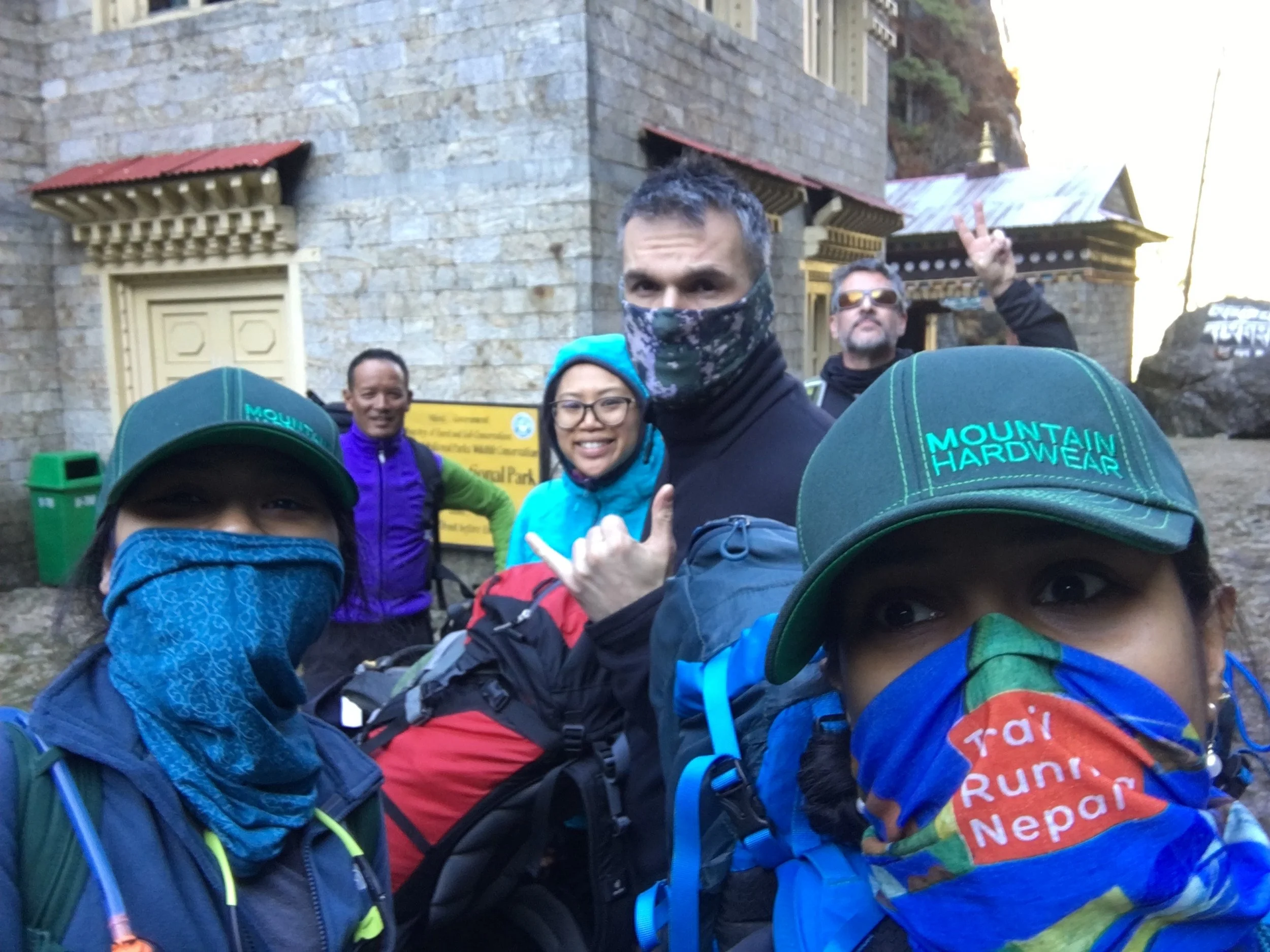
Trekking the EBC route
By Zerin Anzum Karim
I was in touch with Wasfia via facetime, facebook & whatsapp for almost two years, over the course of which we not only shared personal stories of struggle and triumph, but also the different ways we can train our body, mind and soul. We brainstormed many a times to go on a journey together, but it wasn’t until the summer of 2017 that things started to fall in place for the both of us. Within 5 weeks of Wasfia offering me to be Osel’s first mentee, with as much intensive training as possible under my belt, some starting funds raised through my personal and professional communities, and a partial scholarship from Osel, I jumped on a plane from London to Nepal early November in 2017. My initial feelings were of hope, excitement and curiosity as it was not only my first ever visit to Nepal but more importantly my very first meeting with the first Bangladeshi person to have climbed the Seven Summits in person. Having been closely following Wasfia’s efforts to push boundaries for women and inspire young girls to reach for alternative education pathways, I was thrilled to have the opportunity to become the first ever mentee for her foundation, Osel.
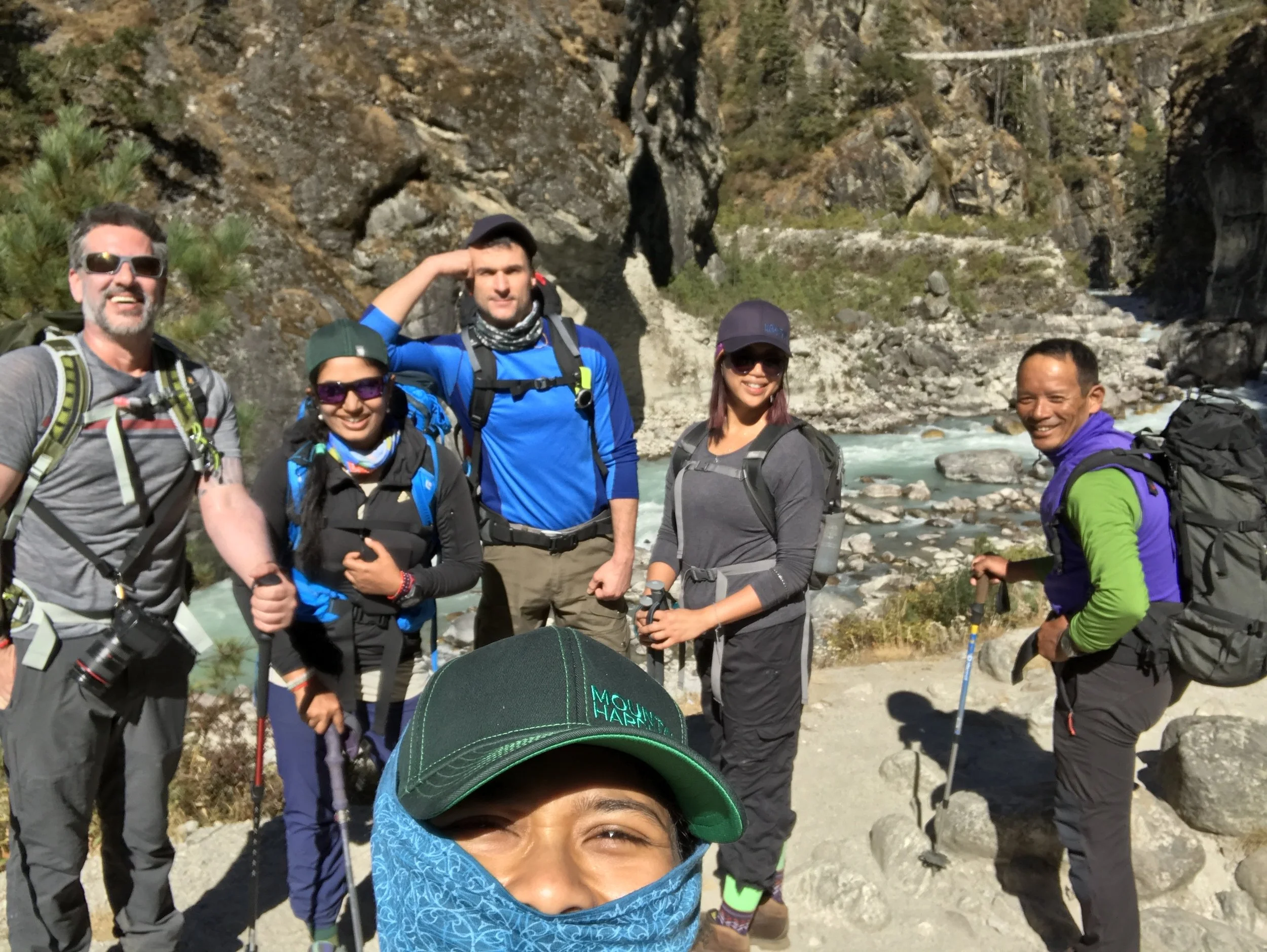
My nights in Kathmandu before the trek were both exciting and nerve wrecking at the same time as I got to know more of Wasfia’s climbing stories and the impossible challenges on her journey first hand. The realisation that I was 4000 miles away from home and about to trek the EBC route did not really hit me until the day I was on the flight to Lukla, and at the starting point of our hike. Flying over the Himalayas whilst feeling the high altitude wind beating wildly against the thin body of our single engine plane, my existence felt insignificant and somehow my emotions shifted from myself to the overwhelming grandeur of the mammoth peaks surrounding me in their calm and watchful existence.
The trek in itself was an incredibly smooth experience with guidance and help from Wasfia at every stage from packing gear to using sunscreen, from climbing mountain steps sideways to ease pressure on your lower body to crossing long hanging bridges holding hands, she was there to support all the way. She measured my oxygen level and heart rate twice a day and reminded me to drink water every hour and eat well to make sure I was physically fit to follow through the remainder of the trek the next day. Her close and constant care was one of the reasons why I managed to trek back from 5100m on my feet rather than flat on a heli. The EBC is located at 5380m and I did not make it all the way up there.
Towards the last few days of the trek, Wasfia informed me that my oxygen saturation level was significantly lower than what was expected at that particular altitude and at the same time my heart rate was abnormally higher than normal. This meant, that my heart was over-working than average to generate blood flow, yet I was still not sufficiently acclimatised. She told me that she was monitoring me closely and if it gets to the point of too much risk, I would have to retreat. The morning of the last leg of the trek, shortly after we started off from Lobuche at 4940m, Wasfia measured my oxygen level to be between 48-53, where others in our group were measuring at 82-88. She advised that there was no way I would be able to proceed without causing potentially serious damage to my health and said, “The basecamp will always be there, but your life might not.”
The thought of failing to reach the destination I set out for, broke my heart but I knew that the woman who had experienced countless losses on the highest mountains of the world would know what is best for me. Wasfia consoled me while I wept at the thought of the shame I will feel in facing the people who knew that I was doing this trek to set an example for other girls to do the same and more. She reminded me how many times she herself had to retreat from higher heights, even as close as mere 300m to summit after months of efforts to get there, often times, in order to save other people or to save her own life from impending weather conditions and that there was no shame in it - it was the wisest thing to do.